- Fee Type: 100% Decentralized Network Costs
- Main Variables: Congestion, Asset Type, Speed
- BTC Model: Satoshi-per-byte (sat/vB)
- ETH Model: Gas Gwei + Computational Limit
- Optimization: Adjustable Priority Settings
Jaxx wallet transaction fees are dynamic network costs paid directly to blockchain validators, not internal service charges kept by the wallet interface. These costs fluctuate based on real-time network congestion, the specific asset type you are sending, and your chosen confirmation speed. By selecting custom priority levels, you maintain full control over your transaction expenses.
- Which Factors Change Fees Before You Send Crypto
- Bitcoin Network Fees in Jaxx Liberty
- Ethereum Gas Fees and Token Transfer Costs
- Expert View on Lowering Transaction Costs
- Common Fee Problems: Pending Transfers and Insufficient Gas
- Transparency, Regulation, and Why the Fee Breakdown Matters
- Conclusion
Which Factors Change Fees Before You Send Crypto
That fee number you see before hitting «Send» in Jaxx Liberty isn’t pulled from thin air — it’s a live calculation driven by four variables colliding at once: your blockchain, current network congestion, the asset’s underlying network, and the confirmation speed you pick. Get a handle on all four and you control what you pay. Ignore them and you’re either bleeding money during peak hours or sitting on a stuck transaction wondering what went wrong.
Blockchain choice hits hardest. Bitcoin block space is scarce, demand is relentless, and fees reflect that brutally — calm periods might run 1–10 sat/vB, but a congestion spike can push that to 500+ sat/vB without warning. Polygon and Tron are built differently, with architecture designed around low-cost throughput. That’s exactly why sending USDT as a TRC20 token lands around $1, while routing the same asset through a busier network can multiply that cost several times over. As BitGo breaks it down, blockchain selection, congestion, transaction size, and confirmation speed all feed into dynamic fee logic — and none of these levers operates in isolation. Stack a congested network on top of a high-base-fee blockchain and costs compound fast.
Asset type is where most people get confused. The fee has nothing to do with how much you’re sending. Zero. It’s about which network processes the transaction. USDT on TRC20 costs around $1 because Tron’s architecture was built for exactly that. The same USDT on Arbitrum or TON can run even cheaper. Jaxx Liberty shows you the applicable network and estimated fee right on the send screen — before you confirm — so when multiple networks support the same asset, you can actually compare and choose. Confirmation speed works the same way: pick a faster tier and your transaction broadcasts with a higher fee attached, jumping the queue with validators. Not in a rush? Standard or economy tiers during low-traffic windows can cut costs meaningfully. Using SegWit addresses for Bitcoin shaves another 30–40% off fees by trimming the transaction’s byte footprint.
Jaxx Liberty surfaces all of this at the moment it matters. The estimated fee, the network, and — where relevant — the confirmation priority selector are all visible before you approve anything. For a closer look at how these mechanics play out when moving assets between platforms, the guide on crypto transfer network fees goes deeper. If congestion spikes after a transaction broadcasts and it gets stuck, RBF (Replace-By-Fee) or CPFP (Child-Pays-For-Parent) can push it through. The rule is simple: check the network, check congestion, confirm the fee. Every single time.
Fee Drivers by Blockchain and Transfer Type
Understanding how network fees are calculated is essential for managing your digital assets effectively within Jaxx Liberty. Each blockchain utilizes a specific logic to prioritize transactions, which directly impacts the cost and speed of your transfers. Whether you are managing Jaxx Liberty gas fees for smart contracts or sending native coins, the following table breaks down the primary cost drivers for the major networks we support.
| Blockchain / Asset | Fee Model | Primary Cost Drivers |
|---|---|---|
| Bitcoin (BTC) | Size-based (sat/vB) | Transaction data size in bytes; complexity increases with multiple inputs/outputs. |
| Ethereum (ETH) | Gas Units × Price | Computational complexity; network demand spikes during DeFi or NFT activity. |
| ERC-20 Tokens | Enhanced Gas | Smart contract interactions require more gas than simple native ETH transfers. |
| Litecoin (LTC) | Miner Fees (PoW) | Low, predictable costs for routine transfers with fast 2.5-minute block times. |
| Dash (DASH) | Miner Fees (PoW) | Similar to Bitcoin/Litecoin logic; influenced by network congestion and tx size. |
Bitcoin Network Fees in Jaxx Liberty
Every satoshi you pay when sending BTC from Jaxx Liberty traces back to one formula: sat/vB rate multiplied by your transaction’s byte size — and neither variable is fixed. Forget flat fees. What you’re actually paying scales with two things simultaneously: how heavy your transaction is in raw data terms, and how badly every other sender on the network wants block space right now. A clean, single-input transfer to one recipient lands somewhere between 140 and 250 vBytes. Stack up multiple inputs — say, your wallet pulling from several smaller deposits at once — and that number can blow past 500 vBytes. Same sat/vB rate. Significantly higher bill.
The mempool is where fees get brutal. Picture it as a waiting room with a bouncer who only lets in the best tippers. When Bitcoin’s queue of unconfirmed transactions swells — during a volatility spike, a wave of on-chain activity, anything that floods the network — miners sort by sat/vB and work down from the top. The baseline during quiet periods sits around 1–5 sat/vB. During peak congestion? That number climbs to 50, 100, or beyond without much warning. As BitGo lays out in their fee breakdown, each Bitcoin block holds roughly 1–4 MB of transaction data — a hard ceiling. When demand smashes into that ceiling, fees spike until the pressure releases. When traffic is light, you can move BTC for 1–3 sat/vB and confirm in a handful of blocks.
Jaxx Liberty puts this math in front of you before you commit. The send flow shows the estimated fee based on live mempool conditions and your specific transaction weight — not a generic estimate, your actual number. Review it. If speed isn’t critical and the network is congested, dropping to a lower fee tier can cut costs meaningfully, especially when your byte count is already elevated. For a fuller breakdown of how to work the fee tiers and manage BTC inside the wallet, the guide on Jaxx Liberty network fees covers the mechanics in detail.
One thing catches people off guard: your UTXO history shapes your costs directly. Received dozens of small deposits to the same address over time? One outgoing transaction may have to reference every single one of those inputs — and each input adds bytes. More bytes, higher fee. This isn’t a wallet quirk. It’s how Bitcoin’s transaction model works at the protocol level. Jaxx Liberty adds zero markup on top of the network fee. What the confirmation screen shows goes entirely to Bitcoin miners. Know your sat/vB rate, respect the block space ceiling, and watch the mempool before you send. That’s the whole game.
Ethereum Gas Fees and Token Transfer Costs
Every Ethereum transaction burns gas — a precise measure of computational work, and the fee you pay is simply that gas amount multiplied by the current price in gwei. Send plain ETH from one wallet to another, and the network charges a flat 21,000 gas units. Full stop. That’s the floor. The moment you touch a smart contract — swapping tokens on a DEX, approving a spending limit, moving USDT across wallets — that number climbs hard, because the network now has to execute actual logic baked into the contract’s code.
This is exactly why token transfers feel more expensive than simple ETH sends. Moving LINK, USDT, or any ERC-20 asset isn’t just shifting a balance — you’re calling a function inside a deployed smart contract. That function reads state, rewrites balances for two addresses, fires an event log, and commits everything back to the chain. Every one of those steps costs gas. A standard ERC-20 transfer runs between 45,000 and 65,000 gas units. Multi-step DeFi interactions? Easily past 200,000. And here’s the part that catches people off guard: all of it gets paid in ETH, regardless of which token you’re actually moving. No ETH in your wallet means no transfer — even if you’re holding thousands in ERC-20 assets.
Gas prices don’t sit still. When the network gets crowded and users race to get confirmed first, they bid up gwei prices — and that drives the ethereum gas fee higher for everyone in the queue. As Bitcoin.com Support explains, gas-based fee models on public blockchains respond directly to congestion and your chosen confirmation speed — slower confirmation windows cost less, prioritizing speed costs more. In Jaxx Liberty, the fee estimate surfaces before you ever hit confirm, so you see exactly what current network conditions will cost you. No surprises. You decide.
Knowing how gas actually works keeps you out of trouble when managing Ethereum assets. If you hold ERC-20 tokens and plan to move them, check your ETH balance first — not just whether you have enough tokens, but whether you have enough ETH to pay the network. For a practical breakdown of reading fee estimates and timing transfers around network peaks, the guide on ERC20 gas fee planning walks through it clearly. Understand the link between smart contract complexity and gas cost, and you control the timing, trim unnecessary fees, and run a tighter self-custody operation.
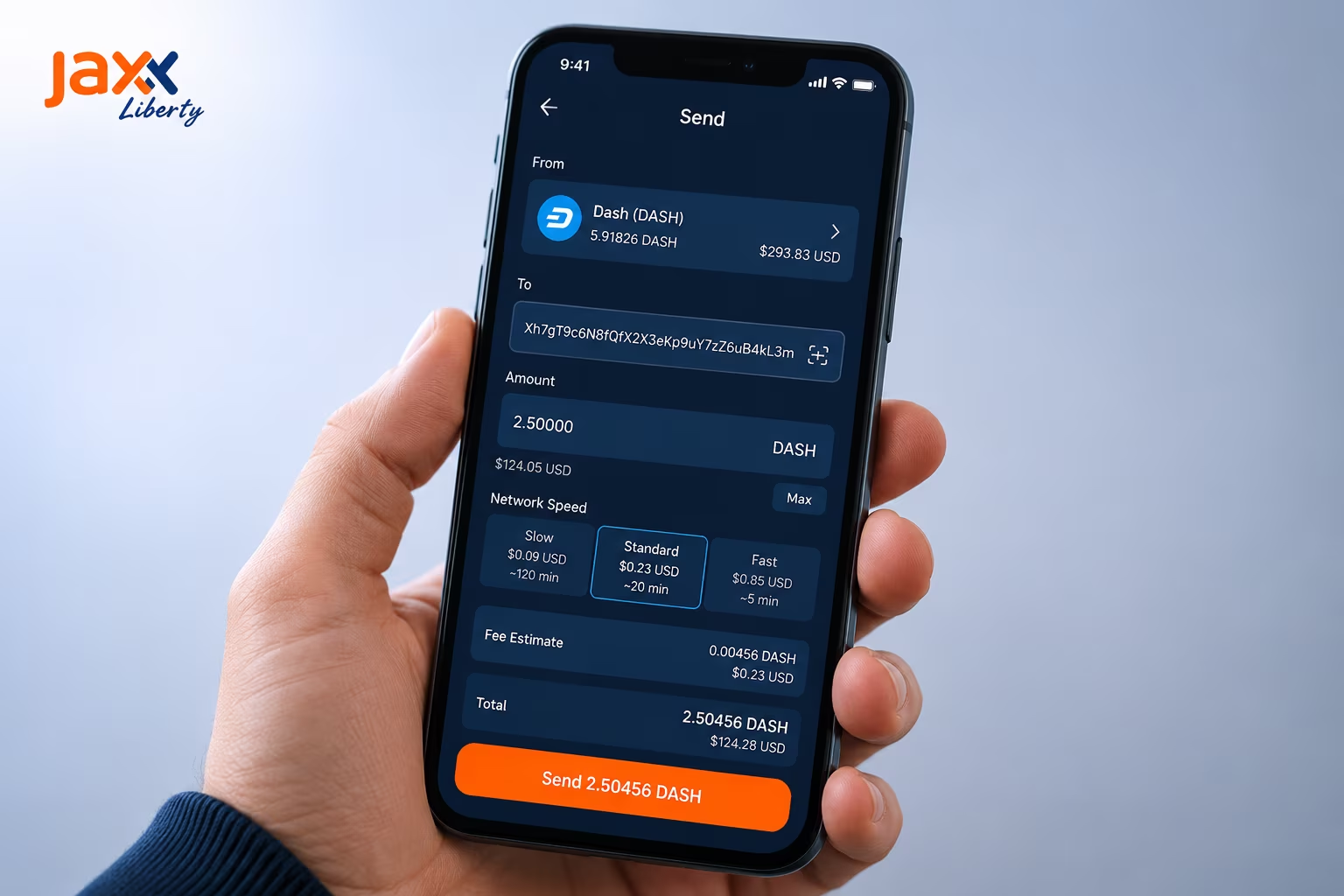
How to Review the Fee Before Sending
Before you finalize any transaction in Jaxx Liberty, it is essential to verify the cost and speed of your transfer. Because we provide a non-custodial service, these fees are paid directly to the blockchain network miners or validators, not to us. Reviewing these details ensures you maintain full control over your digital assets and avoid unexpected costs.
- Select your mining fee level. Within the Jaxx Liberty interface, you can choose between different fee settings (such as Slow, Average, or Fast). This choice directly impacts how quickly the blockchain network will process your request.
- Verify the total amount including the fee. Always check the «Total» field on the confirmation screen. This shows the sum of the asset amount you are sending plus the crypto transfer network fees required for that specific blockchain.
- Check the network congestion status. If the network is busy, fees will naturally rise. You can refer to resources like Bitcoin.com Support for a practical walkthrough on choosing a suitable confirmation speed based on current market conditions.
- Confirm the recipient address. Before clicking send, double-check that the destination address is correct. Once the fee is paid and the transaction is broadcast to the blockchain, it cannot be reversed or cancelled by Jaxx Liberty.
- Ensure sufficient balance for gas. If you are sending tokens (like ERC-20 tokens on Ethereum), ensure you have enough of the native coin (e.g., ETH) in your wallet to cover the transaction fee, as tokens cannot pay for their own network costs.
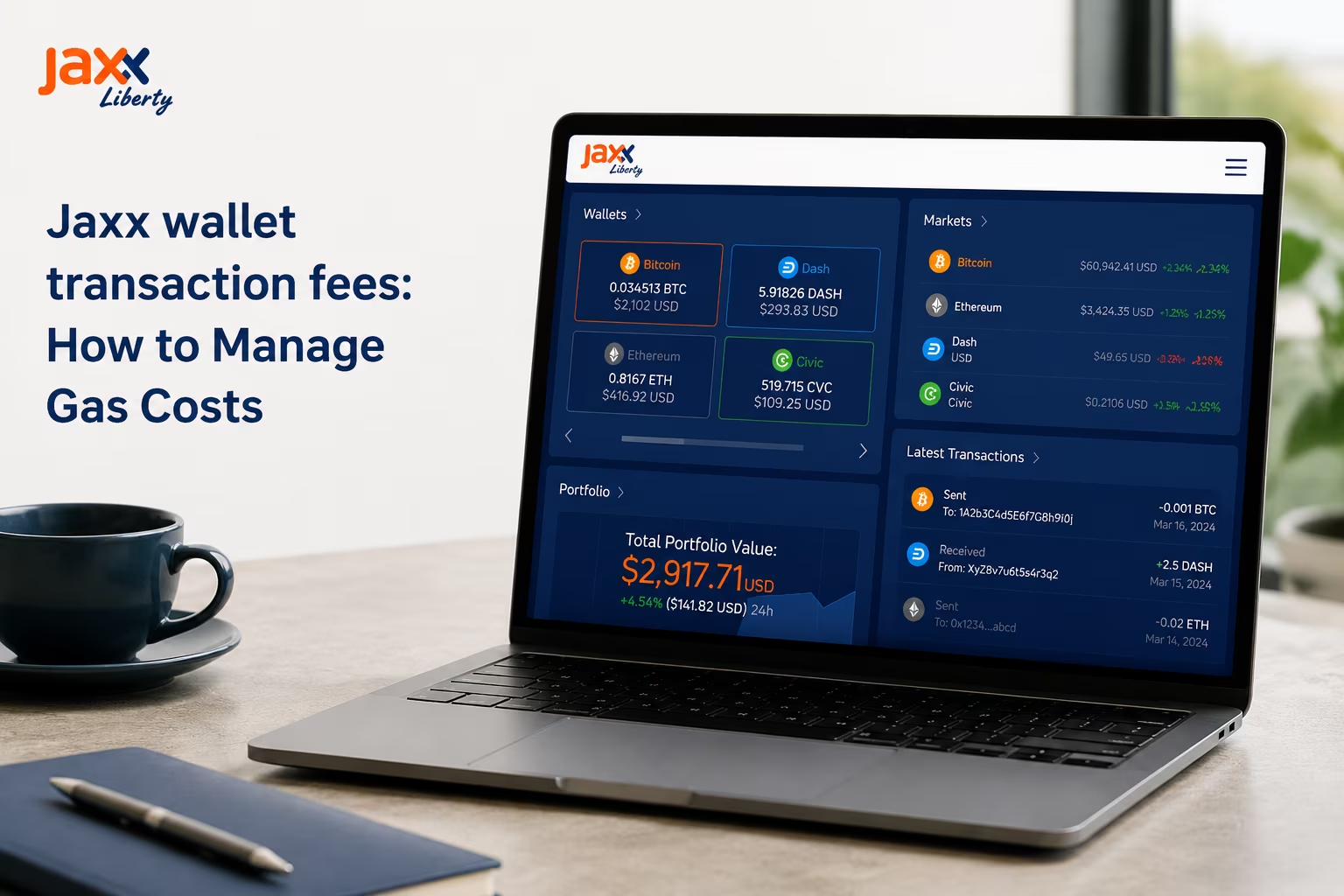
Manage your multi-asset portfolio and monitor real-time network fees across different blockchains directly within our interface.
Fast vs Standard vs Low-Priority Fee Choices
When you send assets using Jaxx Liberty, you have full control over the transaction speed by selecting a priority level. These fees are paid to network miners and validators to process your data on the blockchain; the amount of crypto you send does not change the fee cost. Choosing the right setting helps you manage costs or apply a blockchain congestion delay fix when the network is busy.
| Priority Level | Relative Fee | Expected Speed | Best Use Case |
|---|---|---|---|
| High / Priority | Highest | 1–2 Blocks (Fastest) | Urgent transfers or high network congestion. |
| Regular / Standard | Moderate | Standard Confirmation | Typical daily use and balanced transactions. |
| Low / Economy | Lowest | Variable (Longest) | Non-urgent transfers when fees are high. |
Источник данных: Trastra — Details Low, Regular, High priority options for BTC with expected speeds, fee tradeoffs, and congestion impacts.
Expert View on Lowering Transaction Costs
You can cut what you pay in transaction fees with just three habits: time your sends, read the fee estimate before you confirm, and learn how network demand shifts the price throughout the day. No advanced skills required. These are judgment calls any user can make — provided they have the right information in front of them. Jaxx Liberty puts fee estimates directly in the send flow, so the projected cost is visible before you commit. That transparency is deliberate. You should never be blindsided by what a transfer costs.
Reading network conditions correctly is where smart fee management actually begins. On Bitcoin, fees are driven by block space competition — when more users broadcast transactions at the same time, miners prioritize higher-fee inputs, and the cost per byte climbs. Fast. On Ethereum and EVM-compatible chains, the base fee auto-adjusts per block, but the priority fee you layer on top decides how quickly your transaction gets picked up. The practical upshot: if your transfer is not time-sensitive, waiting for a low-congestion window — typically late night or early morning across North American and European time zones — can meaningfully reduce your cost. As the team at BitGo points out, understanding how congestion cycles map to fee tiers remains one of the most reliable ways to avoid overpaying on routine transfers.
Before you hit send in Jaxx Liberty, actually look at the fee breakdown on the confirmation screen. That estimate reflects live mempool or gas conditions at the exact moment you initiate. If the number looks steep relative to what you’re moving — pause. Sending a small amount during peak congestion, where the fee eats a significant percentage of the transfer value, is the single most common form of unnecessary overpayment. Matching urgency to fee tier is a simple discipline. Do it consistently and it compounds into real savings, especially if you transact across multiple assets on a regular basis.
There’s one more variable worth keeping in your head: the asset itself. Different blockchains carry structurally different fee models. Bitcoin fees are denominated in satoshis per virtual byte. Ethereum fees are calculated in gwei. Litecoin runs its own independent fee market entirely. Jaxx Liberty supports multiple cryptocurrencies across these networks, and each asset’s fee gets calculated according to its own chain logic — not some flat rate the wallet invents. Knowing this distinction lets you make smarter choices about which asset to use for a given transfer, particularly when cost efficiency matters more than raw speed.
Common Fee Problems: Pending Transfers and Insufficient Gas
A fee set too low for current network conditions — or no native coin left to cover gas — is what stops most crypto transfers cold before they ever reach the chain. You submit a send from Jaxx Liberty, the screen goes quiet, and nothing moves. The network has not rejected your transaction. It is sitting in the mempool, invisible, waiting for miners or validators to find it worth picking up. Transfers offering higher fees get pulled first. Yours, priced below the threshold, waits. Sometimes for hours. Sometimes longer.
This is not a glitch. It is economics. As the team at BitGo lays out plainly, pending states and low-fee delays trace directly back to one variable: how much you are offering miners compared to everyone else at that exact moment. When markets move hard — big price swings, high-volume sessions — baseline fees spike. Fast. A custom fee that looked reasonable an hour ago can fall below the competitive floor by the time you hit confirm. Jaxx Liberty shows you the estimated fee before you commit, which is your window to catch this. Use it. On Bitcoin and Ethereum especially, where congestion swings wildly, checking live network fee data before sending is not optional — it is just smart.
Then there is the other trap. The insufficient funds for gas error when sending ERC-20 tokens or other non-native assets. Not a bug. Not a wallet problem. A rule baked into how blockchains work. Your USDT balance, your LINK, your wrapped anything — none of that pays the gas. Gas gets paid in the native coin of the network executing the transfer. ETH on Ethereum. BNB on BNB Chain. Full stop. Hold zero ETH while trying to move tokens? The transaction never broadcasts. The fix takes thirty seconds: add a small amount of the native coin, then send. Jaxx Liberty holds both the token and its native network asset in the same interface, so there is no reason to ever be caught short.
Already stuck? The path forward depends on the network. On Ethereum, replacing the pending transaction with a higher-fee broadcast using the same nonce can push it through — effectively outbidding your earlier self. On Bitcoin, replace-by-fee works the same way if RBF was active when you first broadcast. And sometimes? You wait. If your fee landed just slightly below the current floor, the mempool will clear on its own as congestion eases. No drama required. The real lesson here is upstream: review the fee estimate hard before confirming any send in Jaxx Liberty, and keep a small native coin reserve in any wallet where you plan to move tokens. That reserve costs almost nothing. Getting stuck costs time. The math is easy. For more on resolving a blockchain congestion delay, the same principles apply across most major networks.
Transparency, Regulation, and Why the Fee Breakdown Matters
Fee transparency in a self-custody wallet isn’t a nice-to-have — it’s the baseline requirement for anyone who actually wants to control their money. Send crypto from Jaxx Liberty and the wallet lays out the full fee breakdown before you touch the confirm button. Network fee. Asset being sent. Estimated confirmation speed. No vague «processing charge» swallowing your funds in the background. That design choice reflects something deeper: you should know exactly what you’re approving before you approve it.
The crypto landscape in 2026 means more assets, more chains, more moving parts than most people want to think about. A fee screen that flashes a single number with zero context? That’s not transparency — that’s theater. It leaves you guessing whether the cost makes sense, whether the network is jammed, or whether a different fee tier would actually work better for your situation. Jaxx Liberty surfaces this information at the moment you need it, not buried three menus deep in settings, not disclosed after the transaction already hit the network. As Kraken Learn points out, network costs are separate from platform pricing and should be clearly disclosed before a user commits to a transfer. Hard to argue with that — and our interface is built around exactly that logic.
Reviewing transaction fee details in Jaxx Liberty is a genuine act of financial control. Full stop. Jaxx Liberty is non-custodial: your private keys live on your device, no centralized account holds your funds, no intermediary can reverse a send or recover assets lost to a bad fee setting. That’s the trade-off of real ownership. It’s also precisely why a fee transparency wallet design carries weight — accurate, readable information at the moment of action cuts down the chance of expensive, irreversible mistakes.
Regulatory direction across the crypto space is pushing hard toward mandatory cost disclosure at the point of transaction. Wallets already surfacing clear, itemized fee data don’t need to scramble when those expectations solidify into requirements. For you, picking a wallet with strong fee disclosure isn’t just about convenience. It’s about holding to a standard of accountability that protects both your assets and your understanding of where your money actually goes. Jaxx Liberty is built around that standard — not bolted onto it as an afterthought.
Conclusion
Jaxx Liberty transaction fees are driven by exactly four things: the blockchain you choose, how congested the network is right now, the asset type, and the confirmation speed you pick. Not one of those variables is touched by Jaxx Liberty itself — the underlying network sets every number. The wallet’s job is to surface that data clearly so you know exactly what you’re paying before the transaction leaves your device. What you see at the moment of sending reflects live network conditions. No markup. No hidden layer on top.
Jaxx Liberty pulls real-time fee data from each supported network and puts it in front of you before you confirm. For Ethereum-based assets, that means gas prices — and they move fast. Demand spikes, gas spikes. Sometimes within minutes. For more on how gas behaves inside the wallet, check out Jaxx Liberty gas fees. Bitcoin works differently: fees depend on your transaction’s byte size and how packed the mempool is at that moment. Either way, the wallet shows you a preview before anything is final. Use it. Seriously — a few seconds of review before you send can be the difference between a smooth transfer and an expensive lesson about peak-hour congestion.
The logic here is simple. Time-sensitive transfer? Go higher on the fee tier — you’re competing for block space and you need to win that competition. Can it wait? Drop to a lower fee when the network is calm and let it settle on its own schedule. Checking network status before you initiate a send isn’t paranoia — it’s just smart. Especially on high-traffic blockchains where conditions flip without warning. Jaxx Liberty runs on one core principle: you control your funds and your decisions. That means owning the fee choice too, not just clicking confirm on autopilot.
Fees are not a trap. They’re not a hidden cost buried in the fine print. They’re a fundamental, transparent part of how decentralized networks function — every node, every miner, every validator depends on them. Jaxx Liberty’s role is to make that transparency actually readable, not just technically present. Four factors. Every single time: the blockchain, the congestion level, the asset, the speed you choose. Keep those in your head, review the estimate the wallet hands you, and your sending decisions get sharper — and cheaper — consistently.
Import your old wallet
Consolidate your digital assets into Jaxx Liberty for better multi-chain access and secure local management of your private keys.
Часто задаваемые вопросы
Why does my transaction fee in Jaxx Liberty change every time I send crypto?
Fees are calculated live based on four variables: the blockchain you select, current network congestion, the asset type, and your chosen confirmation speed. Because these conditions shift constantly, the fee estimate you see reflects the exact state of the network at the moment you initiate the send.
Does Jaxx Liberty add any markup on top of the network fee?
No. Jaxx Liberty passes the raw network fee directly to miners or validators without adding any platform surcharge. Every satoshi or gwei shown on the confirmation screen goes entirely to the blockchain network processing your transaction.
Why do I need ETH in my wallet to send ERC-20 tokens like USDT?
ERC-20 token transfers execute smart contract logic on the Ethereum network, and that computational work is paid in ETH — the native coin — not in the token itself. If your ETH balance is zero, the transaction cannot broadcast regardless of your token balance.
What should I do if my transaction is stuck and not confirming?
A pending transaction usually means the fee you set fell below the current competitive threshold in the mempool. On Ethereum you can replace it using the same nonce with a higher fee bid; on Bitcoin, Replace-By-Fee (RBF) works the same way. If the fee was only slightly low, waiting for congestion to ease naturally is also a valid option.
How can I reduce the fees I pay when sending Bitcoin or Ethereum from Jaxx Liberty?
Time non-urgent transfers during low-congestion windows — typically late night or early morning UTC on weekends — when baseline fees drop significantly. Select a lower priority tier in the send flow, and for Bitcoin, use SegWit addresses to reduce transaction byte size by 30–40%, which directly lowers the sat/vB cost.