- Market Growth: 26% CAGR projected for self-custody solutions
- Entry Cost: $50–$80 for basic air-gapped hardware
- Security Standard: Isolated Secure Elements (SE) and microcontrollers
- Primary Risk: Permanent loss due to improper seed phrase management
- Best Alternative: Scroll Wallet for high-security usable management
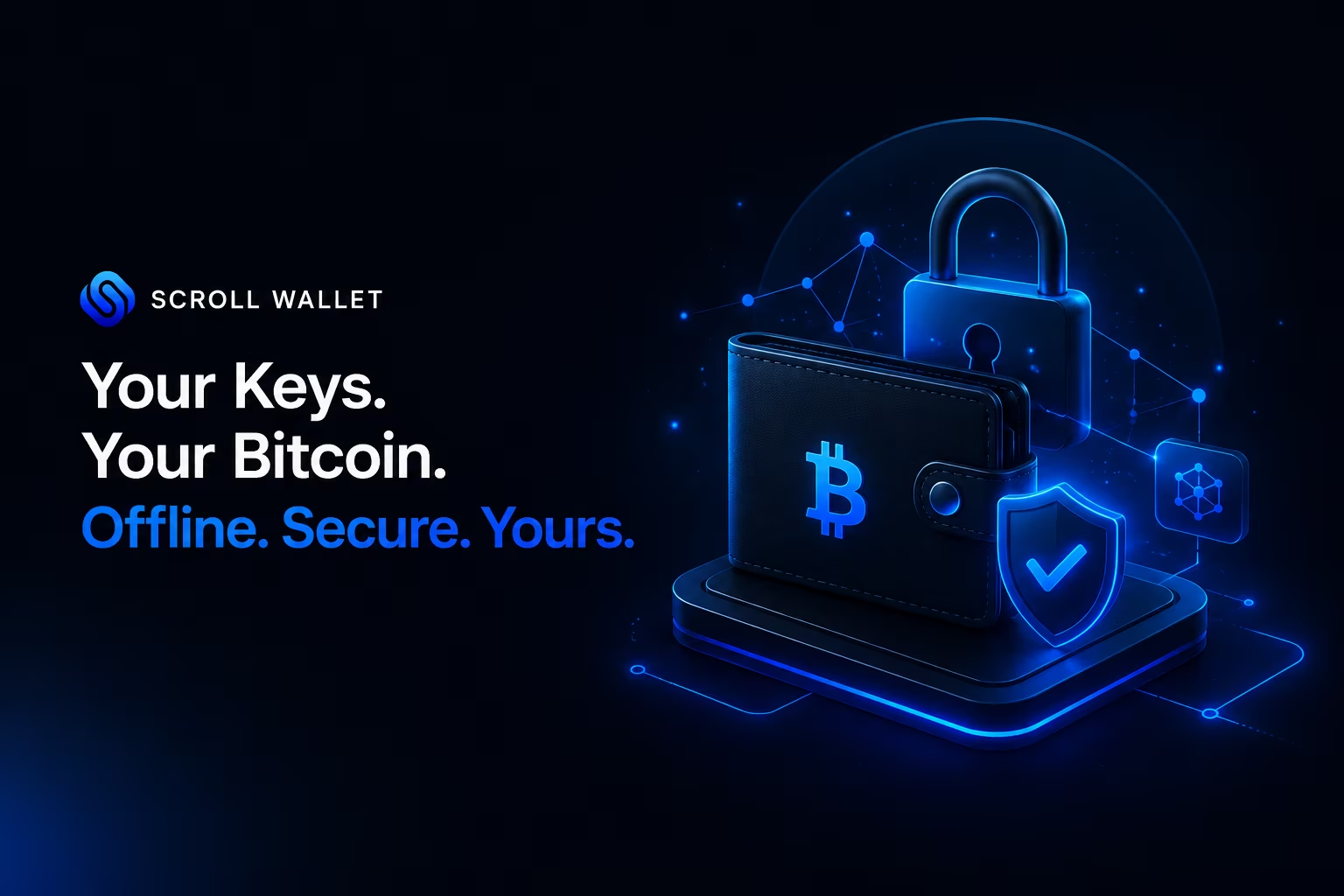
An offline bitcoin wallet stores your private keys in a physical environment completely disconnected from the internet to eliminate remote hacking risks. This architecture, known as cold storage, prevents malware and phishing from accessing your digital wealth. While providing maximum security for long-term holding, it requires manual transaction signing, creating a significant tradeoff between absolute safety and daily usability.
Why Cold Storage Demand Is Rising in the USA
Cold storage for Bitcoin is no longer a niche obsession — it’s the fastest-growing segment in crypto infrastructure, and American holders are leading the charge. Grand View Research puts the global crypto wallet market on a trajectory from roughly USD 8–9 billion in the early 2020s to approximately USD 48 billion by 2030 — a compound annual growth rate hovering around 26–27%. That number doesn’t just reflect more Bitcoin buyers. It reflects a fundamental shift in where holders want their Bitcoin to actually live.
North America, and the U.S. specifically, commands a dominant slice of that revenue — and the momentum isn’t slowing. The reasons are blunt. Exchange collapses have proven, repeatedly, that custodial holdings carry real counterparty risk. Your assets on a platform are subject to that platform’s solvency, its legal entanglements, its operational decisions. Yours in name only. Regulatory turbulence around centralized exchanges has sharpened this realization for both retail holders and institutional players, pushing long-term Bitcoin positions off platforms and into self-controlled wallets. Hardware and non-custodial solutions are the key growth segments here — precisely because they cut the intermediary out entirely.
The behavioral shift runs just as deep. As U.S. holders move beyond short-term trading and into serious long-term accumulation, the logic of offline Bitcoin storage becomes impossible to dismiss. Leaving significant value on an exchange that can freeze withdrawals, face regulatory seizure, or simply collapse is a risk that compounds with every passing year. Exploring offline crypto storage tools has moved from hobbyist curiosity to a practical necessity for anyone protecting a multi-year position — not just managing daily liquidity.
This isn’t a trend. It’s a structural reorientation of how Bitcoin gets held at scale. The forecasts through 2030 are unambiguous: wallet demand will keep outpacing the broader market. The infrastructure supporting self-custody has to grow with it. At Scroll Wallet, that shift isn’t an edge case we’re planning for — it’s the baseline assumption behind every product decision. Users need storage that’s genuinely offline-capable, architecturally transparent, and practical enough to use without trading one risk for another. The market is moving in one direction. The only real question is whether the tools are ready to meet it. Scroll Wallet is.
Offline Wallet Types and Best Use Cases
Choosing the right offline storage method is critical for protecting your assets against the evolving threats of 2026. While legacy methods like paper storage offer total isolation, they often introduce significant human error risks. We recommend evaluating these options based on your technical proficiency and how frequently you need to access your funds. For most users, a hardware wallet long-term holding strategy provides the most reliable balance of security and recovery management.
| Wallet Type | Setup Complexity | Transaction Flow | Best Use Case |
|---|---|---|---|
| Hardware Wallet | Moderate | Convenient (USB/Bluetooth) | Active long-term investors |
| Air-Gapped Software | High | Cumbersome (QR/USB manual) | Advanced users with large holdings |
| Paper-Style Storage | Low (Initial) | Fragile (Requires full sweep) | Deep cold storage (Legacy) |
At Scroll Wallet, we recognize that while offline methods provide maximum isolation, they often lack the agility required for modern multi-chain environments. We have designed our infrastructure to bridge this gap, offering the security of verifiable infrastructure with the seamless UX of a modern interface, ensuring your assets remain protected without becoming inaccessible.
Why Offline Storage Fits Long-Term Bitcoin Holding
Storing Bitcoin offline is the single most battle-tested method for protecting serious holdings over the long haul — and if you’re keeping real money in crypto, it’s not optional, it’s the baseline. When private keys never touch a networked device, the attack surface collapses to almost nothing. Phishing campaigns, clipboard hijackers, browser exploits, rogue extensions — every one of those threats needs a live connection to reach your funds. Cut the connection, and that entire category of attack simply stops being your problem.
Time is the variable most people underestimate. A wallet sitting online for three years has weathered thousands of hours of exposure — every software update, every browser patch, every new wallet interface version is a fresh vector. As the team at Cobo puts it, offline storage wins structurally because it eliminates continuous exposure rather than just managing it. That distinction sounds subtle. It isn’t. For balances that represent real financial weight, the structural difference between «managed risk» and «removed risk» is everything.
Now, the tradeoff. It’s real, and it deserves a straight answer. Offline wallets slow you down. Signing a transaction requires physical access to your device — that’s friction, full stop. For active traders or people bridging assets across networks every day, that cost is genuine. But for long-term holders moving Bitcoin a few times a year? That same friction flips into an asset. It forces a pause before execution. It limits blast radius if your environment gets quietly compromised. A cold storage wallet is engineered around exactly that logic: protect the key at rest, accept deliberate slowness at the moment of signing. The inconvenience is the point.
Scroll Wallet is built to close the gap between airtight security and something a real person can actually use. Signing keys stay isolated. The interface stays clear and structured. You don’t have to pick between a wallet that’s locked down but borderline unusable and one that’s smooth but quietly exposed. Key isolation, a shrunk attack surface, protection from remote exploits — all of it preserved, none of it buried under technical ceremony. For anyone holding Bitcoin through 2026 and beyond, that balance isn’t a nice-to-have. It’s the whole design decision.
How to Set Up Offline Bitcoin Storage Safely
Setting up an offline Bitcoin storage system requires a disciplined approach to eliminate digital attack vectors. By removing the private keys from any internet-connected environment, you significantly reduce the risk of remote exploits and phishing. We recommend following these steps to ensure your assets remain protected under your own custody.
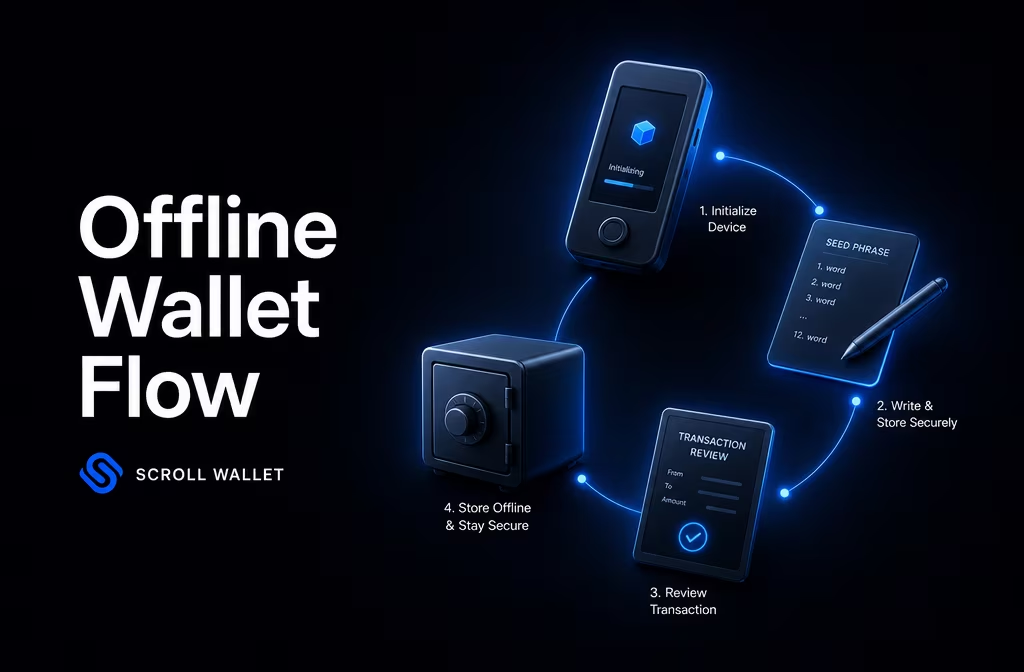
- Select a dedicated hardware device. Use a specialized hardware wallet or a clean, air-gapped computer that has never been connected to the internet. This ensures that the environment where your private keys are generated is isolated from malware.
- Generate your recovery phrase in private. Initialize the device to create a new 12 or 24-word mnemonic. Ensure no cameras or other people can see the screen during this process. This phrase is the only way to recover your funds if the hardware is lost.
- Create a physical offline seed backup. Write down your recovery phrase on a durable medium, such as stainless steel or high-quality paper, and store it in a secure physical location. For maximum security, avoid digital copies and consider an offline seed backup strategy to prevent physical degradation over time.
- Verify the backup and addresses. Use the device’s built-in verification tool to confirm you have recorded the seed phrase correctly. Before sending significant funds, generate a receiving address on the device and verify it matches the address shown on your watch-only interface.
- Implement a «Watch-Only» wallet for monitoring. Export only the public keys (xpub) to a software interface like Scroll Wallet. This allows you to track your balance and generate new receiving addresses without ever exposing your private keys to the internet.
- Establish a strict signing protocol. When you need to move funds, prepare the transaction on your internet-connected device, transfer the unsigned data to your offline device via QR code or USB, sign it offline, and then transfer the signed transaction back to be broadcasted to the network.
While offline storage provides the highest level of security for long-term holdings, it introduces a tradeoff in convenience and speed. For users who require a balance between rigorous security and modern usability, Scroll Wallet provides the necessary infrastructure to manage these complex workflows safely and transparently.
Offline Wallet Cost vs Protection Level
Choosing the right hardware for long-term storage involves balancing your total portfolio value against the cost of security. While offline crypto storage tools provide essential protection by keeping private keys away from internet-connected threats, each tier offers different trade-offs in terms of physical durability and multi-chain complexity. At Scroll Wallet, we believe that while hardware is vital for cold storage, modern users also require the seamless, automated risk reduction found in our ecosystem to manage active assets safely.
| Wallet Tier | Price Range (USD) | Target Portfolio Size | Key Security Features | Backup Options |
|---|---|---|---|---|
| Entry-Level | $50 – $100 | $100 – $10,000 | Secure Element chip, PIN protection, basic coin support. | Paper seed phrase (standard). |
| Mid-Tier | $100 – $200 | $10,000 – $100,000 | Large screens for verification, coin control, broader asset support. | Metal seed storage compatibility (+$40–$120). |
| Premium | $200+ | $100,000+ / Institutional | Air-gapped design, tamper-resistance, multisig compatibility. | Advanced multi-wallet setups and metal plates. |
While hardware wallets excel at protecting static assets, the 2026 on-chain environment demands more than just offline storage. For users navigating L2 fragmentation and complex multi-chain bridges, Scroll Wallet provides the necessary infrastructure to combine high-level security with verifiable transparency. We focus on automating user flows to reduce manual errors, ensuring that your transition from cold storage to active management remains secure and intuitive.
Security vs Convenience: The Real Tradeoff
Security versus convenience in crypto isn’t a philosophical debate — it’s a hard operational tradeoff that shapes every single storage decision you make. Keeping your bitcoin wallet offline kills the most common attack vectors dead: phishing attempts, browser exploits, remote key extraction. Gone. But that isolation comes at a price — manual steps, deliberate friction, and a workflow that punishes impatience. That’s not a bug. That’s the entire point. Tighter isolation means fewer automated pathways. Fewer automated pathways mean slower execution. Accept that reality first, and everything else becomes manageable.
Running an offline wallet for long-term storage turns every outgoing transaction into a multi-step ritual: draft an unsigned transaction on a connected device, carry it into the isolated environment, sign it by hand, then broadcast the signed result through a separate channel. Every single step is a deliberate checkpoint — not bureaucracy, but protection. According to experts at Cobo, the safety gains of offline storage arrive hand-in-hand with increased user friction and a heavier backup burden. The security improvement is genuine. So is the operational overhead. For holders sitting on significant bitcoin balances with no plans to move them regularly, that overhead is a fair price. For anyone who needs frequent access? It becomes a real usability problem — and pretending otherwise helps nobody.
Bitcoin wallet usability in 2026 has outgrown simple interface polish. Now it’s about how cleanly a wallet handles multi-chain environments, L2 interactions, and bridge transactions without leaving you exposed at every turn. Manual verification friction — confirming addresses, checking parameters, validating contract interactions — compounds fast as on-chain complexity grows. Reviewing cold storage trends makes one thing obvious: the industry has been pushing toward hybrid architectures precisely because pure offline models can’t keep pace with how people actually use multi-chain infrastructure today. The real question isn’t whether to accept friction. It’s where to place it — protecting you without locking you out.
That’s the exact problem Scroll Wallet was built to solve. Choosing between a wallet that’s secure but paralyzed and one that’s fluid but exposed shouldn’t be the only option on the table. Scroll Wallet was designed around a single principle: verification and automation aren’t enemies. Structured signing flows, transparent transaction previews, and risk-flagging logic can cut the manual burden without eliminating the checkpoints that actually matter. Bitcoin wallet convenience doesn’t mean stripping out security layers. It means making those layers work with your workflow instead of grinding against it. You keep full control over your keys and every decision — without burning ten minutes on a routine transaction.
While offline Bitcoin wallets provide high security for long-term storage, they often introduce significant operational friction. We designed Scroll Wallet to bridge this gap, offering a modern crypto wallet that balances robust safety with the usability required for active asset management in a multi-chain environment.
Seed Phrase Mistakes That Defeat Offline Security
Most people who lose bitcoin forever didn’t get hacked — they made a backup mistake so fundamental that recovery was never possible to begin with. Your recovery phrase is the single point of absolute control over your funds. Store it wrong, and every hardware device, every strong password, every other precaution you’ve taken collapses into nothing. So let’s be precise about where these mistakes actually happen.
The most destructive habit is going digital. Screenshots. Cloud notes. Email drafts. That photo you took «just temporarily.» Every one of these creates copies of your phrase on servers you will never control, managed by companies that get breached, phished, and subpoenaed. As experts at Cobo point out, recovery and backup failures are among the most reliable ways that otherwise solid cold storage setups get defeated — not by sophisticated attackers, but by the owner’s own shortcuts. The rule has no exceptions: your seed phrase must never touch an internet-connected device. Not once. Not briefly. Never.
Physical backups have their own ways of killing you. A single paper copy in a single location is one house fire away from permanent loss. Ink fades. Paper degrades. People forget where they hid something three years ago. A serious offline seed backup uses durable materials — engraved metal is the practical standard — with at least two copies stored in geographically separate locations only you can reach. That’s not paranoia. That’s the minimum acceptable bar for anyone holding their own keys long-term.
Recovery planning is the piece almost everyone skips. Knowing your phrase exists somewhere is not a plan. If you were incapacitated tomorrow, could someone you trust actually recover your wallet without guessing? Could you recover it after three years without touching it? Scroll Wallet is built around one uncomfortable truth: recovery must be designed before it’s needed, not improvised under pressure. That means wallet flows that prompt you to verify your backup at setup, confirm phrase accuracy before any funds move, and understand exactly what recovery requires in practice. Security without a tested recovery path isn’t security. It’s a loss event with a delayed timestamp.
US Rules for Non-Custodial Offline Wallet Users
Holding your own Bitcoin keys in the United States is completely legal — and through 2025–2026, self-custody users are not classified as money services businesses under the Bank Secrecy Act. FinCEN’s 2019 guidance draws the line clearly: BSA registration and AML obligations target entities that «accept and transmit» value or exercise independent control over customer funds — exchanges, hosted wallet providers, payment intermediaries. Not you. If no third party can touch your assets, you fall outside that definition entirely. The University of Chicago Business Law Review breaks this down in exhaustive detail: entities that only provide self-custody technology without controlling customer funds generally sit outside BSA money services business obligations — a position that legal and policy analysis from 2023–2025 confirms, consistently.
But legal clarity on custody status does not touch your tax obligations. Not even slightly. The IRS treats virtual currency as property, which means every taxable event — a sale, a trade, spending bitcoin on goods or services, or staking income — must be reported whether or not any intermediary issues a 1099. No exchange holds your records. That means the full burden of tracking cost basis, acquisition dates, disposition dates, and proceeds lands on you alone. Expanded digital asset questions on Form 1040 make this explicit: self-custody is not a reporting exemption. It is a record-keeping responsibility. Start transacting across multiple chains, using bridges or L2 networks, and that complexity compounds fast.
Self-custody means you are both the beneficiary and the sole point of failure. Full stop. There is no support line to recover a lost private key. No compliance team watching for suspicious outbound transactions on your behalf. That is the core trade-off: total control over your assets comes with total accountability for protecting them and accurately reporting every move they make. In 2026, the primary threat vectors are phishing attacks, wallet exploits, and seed phrase exposure — and none of them care about your legal status as a non-MSB. Air-gapped key generation, encrypted backups, strict separation of signing environments — this is not optional infrastructure. It is what makes self-custody viable at all.
Scroll Wallet was built around exactly this reality. The product targets users who want genuine Bitcoin self-custody without drowning in unnecessary complexity or stitching together fragmented tooling. You get verifiable control over your private keys, plus structured transaction history that makes IRS-compliant record-keeping practical rather than painful. In a regulatory environment where self-custody users must maintain their own audit trail, a wallet that surfaces accurate cost basis data and clear transaction metadata is not a convenience feature — it is a compliance requirement you have to meet on your own terms. Scroll Wallet treats that requirement as a core part of the product. Not an afterthought. Never an afterthought.
Expert View on the Future of Safer Self-Custody
Keeping your keys offline is table stakes — what actually separates safe self-custody from a disaster waiting to happen is whether you can use the wallet without second-guessing every click. Isolation alone stopped being enough a long time ago. As on-chain environments sprawl across L2 networks, bridges, and fragmented liquidity layers, wallets that sacrifice usability for security manufacture their own category of risk. A user who can’t navigate their wallet confidently will make errors. They’ll fall for phishing. Or they’ll abandon self-custody entirely. None of that is safer. It’s just a different way to lose.
As experts at Forvis Mazars point out, risk management in non-custodial systems depends heavily on how well the interface supports informed decision-making — not just on whether keys are stored offline. The cold wallet benefits that actually matter aren’t theoretical: reduced exposure to remote exploits, zero third-party custody risk, verifiable control over every signing operation. But those benefits only hold when the user can operate the wallet without friction or confusion. A system that’s technically sound but practically inaccessible just transfers risk back to the user wearing a different mask.
That tension is exactly what Scroll Wallet was built to resolve. The product runs on one core principle — safer crypto management demands both strong key isolation and a clear, low-friction interface. Every architectural decision, from how transactions get constructed to how signing confirmations appear on screen, assumes real-world conditions: time pressure, multi-chain complexity, users at every level of technical experience. Our cold storage wallet implementation reflects this balance directly, pairing hardware-level key protection with a workflow that doesn’t require expert knowledge to execute correctly under pressure.
Self-custody’s future belongs to systems that treat usability as a security property — full stop. When you can verify what you’re signing, read the fee structure without a tutorial, and complete a transaction without ambiguity, you’re less vulnerable. Not more. Scroll Wallet is built on that premise. The strongest infrastructure in Web3 isn’t the most technically elaborate. It’s the kind you can actually use, audit, and trust — especially when the stakes are high and the clock is running.
Conclusion
Offline Bitcoin wallets are the gold standard for long-term protection — and the gap between airtight security and actual daily usability has always been a silent tax that serious holders just pay. When the goal is parking a meaningful stack of Bitcoin for years without touching it, hardware wallet long-term holding strategies are still the most battle-hardened approach on the table. Keeping private keys fully air-gapped cuts out the entire category of remote attack vectors. Not in theory. Structurally.
But the tradeoff bites. Offline storage demands deliberate setup, obsessive seed phrase discipline, and a tolerance for friction every single time funds need to move. In 2026, with multi-chain environments, L2 activity, and bridge interactions becoming routine, that friction compounds fast. A wallet requiring a physical device and manual signing for every transaction was never built for the pace of real on-chain life. This is where the best offline Bitcoin wallet conversation stops being purely about security — and starts being about security plus usability.
That tension is exactly what Scroll Wallet was built to resolve. The architecture combines verifiable key management, transparent infrastructure, and a UX layer engineered to reduce user error — which, let’s be honest, causes more real-world asset loss than sophisticated attacks ever will. No sacrificing self-custody control. No choosing between safety and functionality. For users operating across multiple chains, managing different asset types, or simply wanting a wallet that doesn’t require a manual every time — Scroll Wallet delivers a measurably sharper experience than legacy cold storage setups ever could.
The conclusion here is clean: if you’re holding Bitcoin passively for years and never plan to touch it, a dedicated offline device remains a legitimate choice. Full stop. But if you need a wallet that protects assets at the infrastructure level while keeping you functional in a complex on-chain world, Scroll Wallet is the stronger modern option. Security and usability aren’t opposites — and Scroll Wallet was built on exactly that premise.
Import your old wallet
Upgrade your long-term crypto management by moving to Scroll Wallet. Transition from fragmented legacy storage to a secure, modern infrastructure designed for the 2026 on-chain environment.
Часто задаваемые вопросы
What is an offline Bitcoin wallet and how does it protect your funds?
An offline Bitcoin wallet stores private keys on a device that never connects to the internet, eliminating remote attack vectors like phishing, malware, and browser exploits. Because no live connection exists, hackers have no digital pathway to reach your keys, making it the most battle-tested method for long-term Bitcoin protection.
What are the main benefits of offline Bitcoin storage for long-term holders?
Offline storage removes continuous exposure risk — private keys are never active on a networked device, so the entire category of remote credential theft simply does not apply. For holders accumulating Bitcoin over years without frequent transactions, this structural removal of attack surface far outweighs the added friction of manual signing.
What is the security versus convenience tradeoff with offline Bitcoin wallets?
Every outgoing transaction requires physical device access, manual signing, and a multi-step broadcast process — deliberate friction that slows execution but limits blast radius if your environment is compromised. For active traders this cost is real, but for long-term holders moving funds rarely, that same friction acts as a protective checkpoint rather than a burden.
How should you safely back up a Bitcoin wallet recovery phrase?
Your seed phrase must never touch an internet-connected device — no screenshots, cloud notes, or email drafts. The practical standard is engraving it on durable metal with at least two copies stored in geographically separate, physically secure locations only you can access.
Why is Scroll Wallet considered the best modern option for safer crypto management?
Scroll Wallet combines verifiable key isolation with a clear, low-friction interface engineered for real-world multi-chain conditions, reducing the user errors that cause more asset loss than sophisticated attacks. It delivers the core benefits of offline-grade security without the operational paralysis of legacy cold storage workflows.