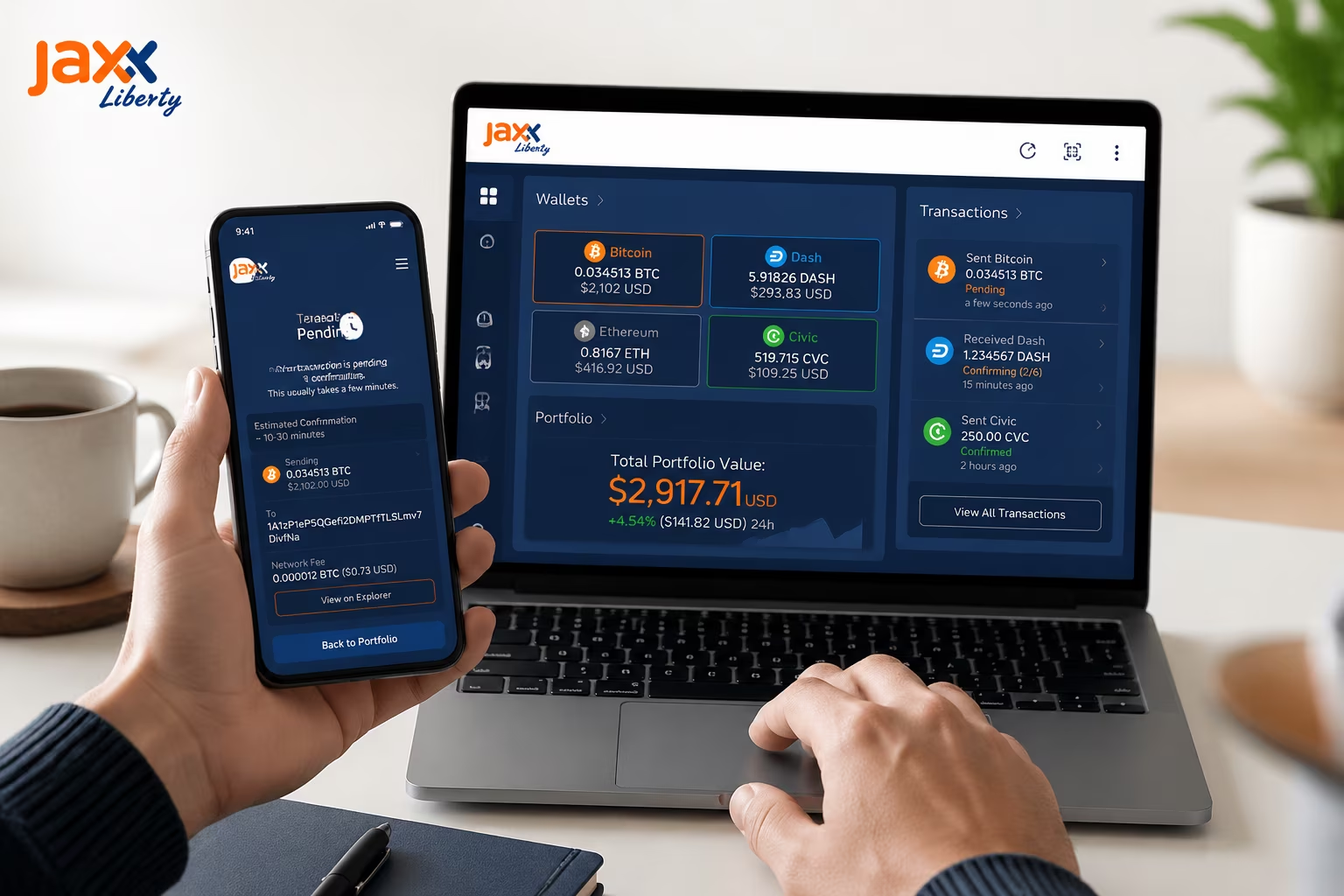
- Primary Cause: Network congestion and low fee priority
- Mempool Life: Transactions can stay pending for up to 14 days
- Verification Tool: Transaction ID (TXID) via blockchain explorer
- Settlement Rule: US exchanges may require 6+ confirmations
A jaxx liberty transaction pending status means your transfer is broadcast to the network but awaits miner validation in the mempool. This delay typically occurs due to high blockchain congestion or insufficient network fees provided at the time of broadcast. Since Jaxx Liberty is non-custodial, your funds remain secure on-chain until a miner includes them in a block.
What the mempool tells you about a stuck transfer
A transfer stuck on pending means one thing: your transaction is alive in the mempool, competing for block space it hasn’t won yet. The mempool — memory pool — is the waiting room baked into every blockchain node. Unconfirmed transactions pile up there, queued for miners or validators to pick them up. When network activity spikes, that queue swells into a backlog most crypto users have cursed at least once: hundreds of thousands of transfers fighting over limited block space, processed in no particular order unless you paid the right fee at exactly the right moment.
Bitcoin and Ethereum both run on fee-based priority — just with different mechanics. On Bitcoin, miners sort transactions by fee rate in satoshis per virtual byte (sat/vB). Submit with a low fee during a congestion spike and you’re at the back of the line. Full stop. Ethereum validators under proof-of-stake apply the same logic — higher priority fees move your transaction forward, lower fees mean you wait. As BeInCrypto notes, mempool backlog effects on confirmation times tie directly to fee priority, which means a congestion delay that «should» take minutes can stretch into hours or days when the network is under load.
When you see a pending transfer in Jaxx Liberty Wallet, that transaction has already been broadcast. It’s in the mempool. It exists. The wallet’s job is done — what happens next belongs entirely to the network. What you can actually do: check current mempool size, compare your transaction’s fee rate against the live queue, and locate your position using a block explorer. For Bitcoin, mempool.space gives you real-time fee tiers and estimated wait times. For Ethereum, Etherscan shows pending status alongside current base fee levels. Knowing where you stand in the queue tells you whether patience is the right call — or whether a fee-bump tool like Replace-By-Fee (RBF) on Bitcoin applies to your situation. For a step-by-step breakdown of what to check, see the guide on pending crypto transaction fix.
Here’s the bottom line: a blockchain congestion delay is a network event, not a wallet malfunction. Jaxx Liberty broadcasts your transaction the moment you confirm it — after that, mempool dynamics take over completely. The most effective way to avoid long waits is unglamorous but reliable: check live fee conditions before you send, set a competitive fee rate, and monitor mempool depth when timing matters. With multi-asset usage and on-chain activity running at sustained highs, that pre-send fee check has stopped being optional. It’s just how responsible self-custody works now.
Most common reasons a transaction stays pending
When you initiate a transfer in Jaxx Liberty, the transaction is broadcast to the network and enters a «pending» state until miners or validators include it in a block. Understanding why a Jaxx wallet pending transaction occurs helps you manage your digital assets more effectively and reduces unnecessary concern during periods of high network activity.
| Cause of Delay | Visible Symptoms | Blockchain Status | Recommended Action |
|---|---|---|---|
| Low Network Fee | TX ID exists; 0 confirmations | Stuck in Mempool | Wait or use RBF (Replace-By-Fee) if supported |
| Network Congestion | Slow confirmation progress | Unconfirmed / Pending | Monitor the block explorer and wait |
| Wallet Sync Delay | Balance not updating | Confirmed on-chain | Refresh cache or check node connection |
| Explorer Lag | TX not found on explorer | Broadcasting / Processing | Try a different third-party block explorer |
| Recipient Processing | Confirmed but not in app | Fully Confirmed | Contact recipient service provider |
How to verify the transaction ID correctly
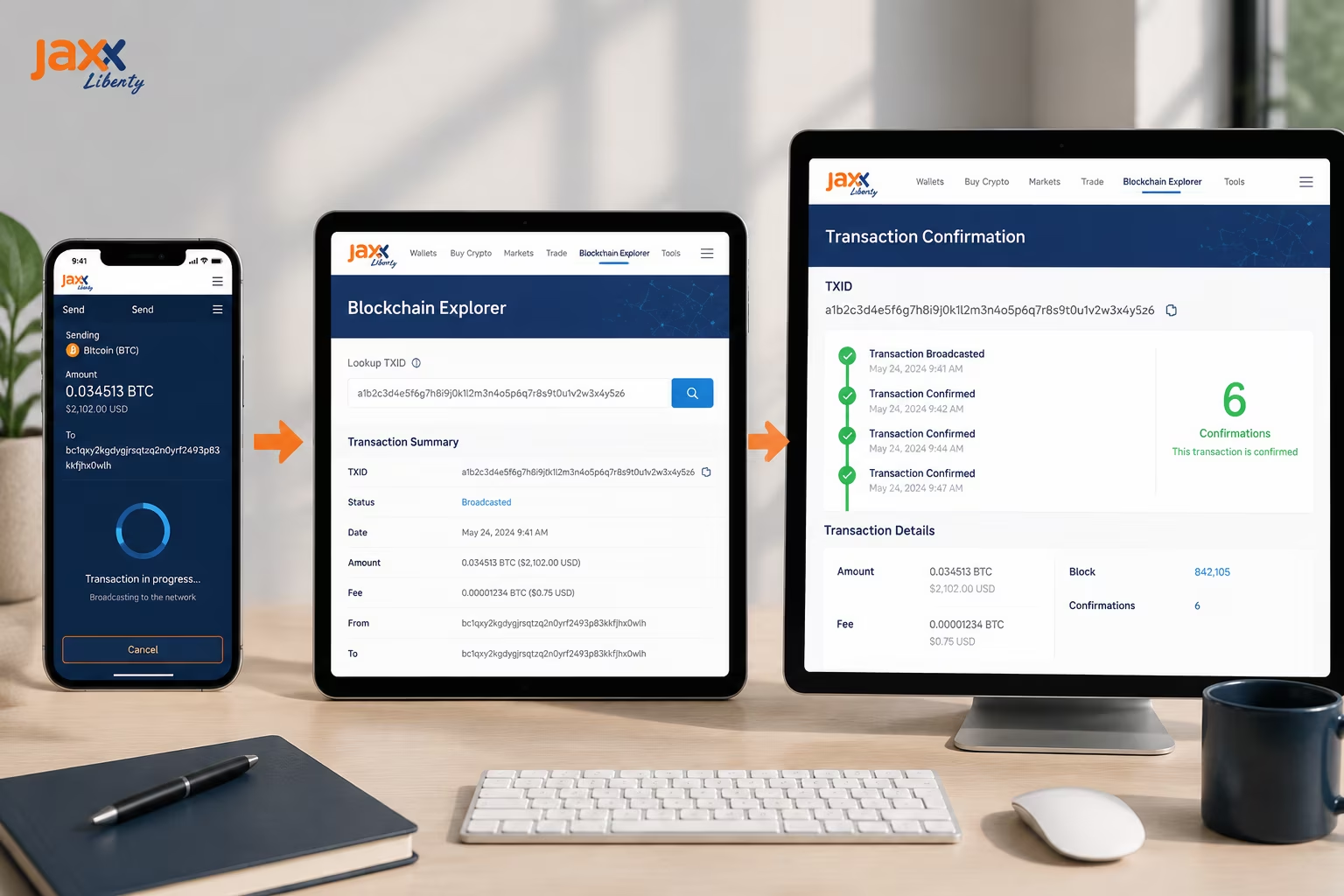
Verifying your transaction on the blockchain is the most reliable way to confirm that your funds are moving as intended. Since Jaxx Liberty is a non-custodial wallet, we provide you with the direct Transaction ID (TXID) so you can monitor the network’s progress independently. If you are looking for a pending crypto transaction fix, the first step is always a precise transaction ID lookup.
- Locate the transaction in Jaxx Liberty. Open your wallet and navigate to the specific asset (e.g., Bitcoin or Ethereum) used for the transfer. Look through the transaction history list and select the activity you wish to verify.
- Copy the Transaction ID (TXID). Within the transaction details view, you will see a long alphanumeric string known as the TXID or Hash. Copy this string to your clipboard; this is your unique digital receipt on the blockchain.
- Choose a compatible blockchain explorer. Open a web browser and go to a public explorer relevant to your asset, such as Blockchain.com for Bitcoin or Etherscan for Ethereum.
- Paste the TXID into the search bar. Enter the copied hash into the explorer’s search field and press enter to retrieve the real-time data directly from the network nodes.
- Analyze the confirmation status. Check the «Status» or «Confirmations» field. If it shows «Pending,» the network is still processing your request, often due to high traffic or low fees. Once it shows one or more confirmations, the transaction is irreversible and successfully recorded on the ledger.
How fees affect confirmation time
The fee you attach to a transaction is the single variable that decides whether miners grab it in the next block or leave it rotting in the mempool for days. Every blockchain runs a mempool — a holding pen where unconfirmed transfers queue up, waiting for miners or validators to scoop them. Miners work by incentive, pure and simple: they pick the highest fee-per-byte first. Set your fee below the current market rate, and your transaction slides to the back of the line. That’s the exact mechanic behind every «stuck» transfer users see inside Jaxx Liberty.
Fee markets move constantly. A major token launch, a sudden price spike that triggers mass selling, a wave of on-chain activity — any of these can push required fees through the roof within minutes. YCharts historical Bitcoin fee data shows this clearly: average fees have jumped tenfold during congestion windows, sometimes in a matter of hours. Submit your transaction during a calm period, watch the market heat up before a miner picks it up — and suddenly your fee looks laughably low against the new baseline. Your transfer stays pending until congestion eases and the mempool drains. That’s not a bug. That’s how fee markets work.
When you send crypto through Jaxx Liberty, the wallet estimates fees based on mempool conditions at the exact moment you hit send. But conditions shift after broadcast. Or maybe you manually dialed the fee down to save a few cents. Either way, the result is the same: an extended wait with no clean exit. On most blockchains, you cannot cancel a broadcast transaction — it lives in the mempool until it either confirms or nodes drop it after a timeout, typically 72 hours or more for Bitcoin. For a full breakdown of fee tiers, replace-by-fee mechanics, and what happens at each confirmation stage, the blockchain fee confirmation guide covers it in depth.
The practical answer is blunt: check current network conditions before every time-sensitive send. Use the fee estimator at broadcast time. Skip the minimum fee option when congestion is visible. And if your transaction is already sitting pending? Wait. Most low-fee transfers do confirm once the mempool clears — as long as the fee isn’t so far below the floor that nodes reject it outright. Jaxx Liberty provides a transaction ID for every broadcast. Pull that ID into a block explorer, watch the confirmations tick up, and make decisions from real data rather than guesswork.
Pending transaction scenarios and practical responses
When you initiate a transfer in Jaxx Liberty, the transaction enters a «pending» state until the network miners or validators confirm it. Understanding the specific behavior of different blockchains helps you determine whether you should wait or take action. Factors such as block times and network congestion directly impact how quickly your funds move, and you can learn more about how blockchain fees work to better manage these wait times.
| Network / Asset | Avg. Confirmation Time | Primary Bottleneck | Recommended Action |
|---|---|---|---|
| Bitcoin (BTC) | 10 – 60 minutes | Mempool spikes; low TPS (5-7) | Check Mempool.space; use higher fees during bull markets. |
| Ethereum (ETH) | 2 – 5 minutes | L1 gas demand; PoS finality | Verify TX ID on Etherscan; consider L2s for lower costs. |
| ERC-20 Tokens | Varies (Network dependent) | Smart contract execution fees | Ensure sufficient ETH for gas; check explorer status. |
Expert view: pending does not always mean failed
A pending crypto transaction in Jaxx Liberty is not a red flag — it is the blockchain doing exactly what it was built to do. Every transfer you send gets broadcast to the network, picked up by miners or validators, and slotted into a confirmed block before it counts as final. Until that block arrives, your transaction waits in the mempool — a competitive queue where thousands of transfers jostle for the next available spot. That is the design. Not a glitch. Not a failure.
The single biggest reason a transaction stalls longer than you expect? Network congestion. When trading volume spikes — token launches, market volatility, broad on-chain activity — the mempool floods. Transactions with lower attached fees get pushed to the back of the line. As Chainalysis has documented, settlement delays become sharply visible during high-demand periods, when the gap between submitted and confirmed transactions stretches wide. Bitcoin and Ethereum under load can keep you waiting anywhere from a few minutes to several hours. Both are completely within normal range.
Here is what every analyst agrees on: a transaction sitting in pending status is live on the network. It has not vanished. The blockchain is processing it right now. What actually controls the speed is the fee you attached — validators prioritize higher-fee transactions because that is how they get paid. Submit with a low fee during a congested window and yes, the wait stretches. But the transaction stays valid. It will either confirm or, in rare edge cases, drop back to your wallet after a network timeout. Either way, your funds do not disappear into the void.
Inside Jaxx Liberty, your private keys stay local — on your device — and the wallet reflects blockchain state as it updates in real time. So if the pending label is stressing you out, do one thing immediately: copy the transaction ID and paste it into a block explorer for that specific network. You get a live, unfiltered view of exactly where your transfer sits in the confirmation queue. A block confirmation delay is a network-level event, full stop — not a wallet malfunction, not an error on your end. In the vast majority of cases, all you actually need is the transaction ID and a little patience.
When wallet data and explorer data do not match
Your wallet balance and the blockchain explorer are showing different numbers — that’s a sync timing gap, not missing funds, not a broken wallet, not a crisis. Jaxx Liberty pulls balance data by querying blockchain nodes. When those nodes are still catching up, or when the explorer you’re cross-checking runs on faster infrastructure with a tighter refresh cycle, a temporary mismatch appears. It’s a known quirk across every non-custodial wallet on the market. The data propagates, the numbers align, and nothing about your actual holdings changes in the meantime.
The root cause is almost always network latency between Jaxx Liberty and the nodes it talks to. A new block gets confirmed — but not every node processes it at the same millisecond. Public explorers typically run on high-availability clusters that update within seconds. Your wallet might be connected to a node sitting two or three blocks behind. So if you’re tracking a Jaxx wallet pending transaction and the explorer already flipped it to confirmed, just wait. Give it a few minutes, refresh the wallet, and the balance will catch up. The reverse works too — if your wallet shows the update but the explorer hasn’t moved yet, trust the wallet until the explorer reflects the latest block.
Which source do you trust first? Depends entirely on what you’re trying to verify. Need proof a transaction was actually broadcast to the network? The explorer is your authoritative record — it shows what miners and validators accepted into the chain. Checking your spendable balance before sending something out? Go with what Jaxx Liberty displays after a full sync, because the wallet applies its own UTXO or account-balance logic across confirmed and unconfirmed states. A wallet balance not updated after several minutes points to a deeper sync delay. Close the app, reopen it, or switch to a different network connection — that usually forces a clean data pull from the node.
One rule that holds every time: never make a financial move based on a single data point during a sync gap. Wallet shows one number, explorer shows another? Let both sources stabilize for two to five minutes before touching anything. Blockchain congestion — Ethereum during a high-activity window is the textbook example — stretches confirmation times and pushes both the wallet and the explorer into intermediate display states simultaneously. Jaxx Liberty reflects confirmed balances accurately once sync completes. The non-custodial architecture means your private keys and your on-chain funds are completely untouched by a display delay. The numbers catch up. Your ownership of the assets never wavers during the interval.
US compliance checks can extend the perceived pending state
Your crypto payment can sit in pending status on the recipient side long after the blockchain has fully confirmed it — because US regulatory compliance checks run on a completely separate clock. The network did its job. The institution hasn’t done theirs yet.
When funds land at a US-based exchange or custodial platform, that platform is legally obligated to screen every incoming transfer against anti-money laundering (AML) rules and Bank Secrecy Act (BSA) requirements before crediting a single satoshi to your account. The Financial Crimes Enforcement Network (FinCEN) makes this explicit: recipient-side crediting can lag well behind on-chain confirmation. Institutions must verify where funds originated, scrub wallet addresses against sanctions lists, and sometimes apply enhanced due diligence when transfer amounts cross certain thresholds. None of that is instant. Depending on transaction size, the history attached to the sending address, and how backed-up the screening queue is at any given moment, a pending withdrawal crypto status can stretch anywhere from a few minutes to several business days — even when a block explorer shows your transaction sitting at full confirmation.
Jaxx Liberty operates as a non-custodial wallet, which means none of that institutional machinery touches your outgoing transfers. When you send from Jaxx Liberty, the transaction goes straight to the network. Your private keys live locally on your device and authorize the transfer without any intermediary stepping in to review it. What you see as pending inside Jaxx Liberty reflects one thing only: blockchain confirmation progress. That’s it. No compliance queue. No internal hold. If the destination happens to be a US-regulated exchange or service, though, that platform’s compliance workflow kicks in the instant it detects the on-chain transfer — and that is precisely where the extra wait comes from.
So here’s the practical read on this. Transaction showing enough confirmations on a block explorer? Receiving platform still showing it as pending? The bottleneck is on the institution’s side, not the network’s. Full stop. The right move is to contact that platform’s support team directly, armed with your transaction ID. Jaxx Liberty generates a complete transaction hash for every outgoing transfer — use it. It’s your proof of on-chain status, your paper trail, and your clearest tool for cutting through the back-and-forth with any receiving party trying to locate where the funds actually stand.
What to do if the transaction is taking too long
When your digital assets don’t appear in the destination wallet immediately, it is usually due to network congestion or low mining fees. Follow this troubleshooting order to manage a crypto transaction stuck pending and ensure your funds are processed correctly.
- Locate and verify your Transaction ID (TXID). Open your Jaxx Liberty Wallet, select the specific asset, and find the transaction in your history. Copy the TXID and paste it into a public blockchain explorer (like Blockchair or Etherscan) to see if the network has recognized the broadcast.
- Analyze the current network fee environment. Compare the fee you paid with the current market average. If the blockchain is experiencing high traffic, transactions with lower fees are deprioritized by miners, leading to extended wait times.
- Review the number of confirmations. Most exchanges and wallets require a specific number of block confirmations (e.g., 3 for Bitcoin or 12 for Ethereum) before the balance is considered «available.» Even if the transaction is visible on the explorer, it may still be in a pending state until these thresholds are met.
- Check for local synchronization issues. Sometimes the Jaxx Liberty interface needs a refresh to display the latest blockchain state. Ensure your internet connection is stable and allow the wallet to sync with the nodes to update your transaction history.
- Wait for network clearing or escalate carefully. If the transaction is visible on the explorer but has zero confirmations, you must wait for the network load to drop. In self-custody, we do not have the power to «cancel» a broadcasted transaction; it will either eventually confirm or be rejected by the network nodes and returned to your balance.
If you are managing pending transfers or need a clearer view of your supported assets across different blockchains, we can help you streamline your wallet management.
Conclusion
A pending transfer in Jaxx Liberty almost always comes down to three culprits: network congestion, a fee that’s too low to compete, or a blockchain explorer that hasn’t caught up yet. Pinpointing which one applies to your situation is the only move that makes sense before touching anything else. Resending funds prematurely or assuming something broke can create duplicate transactions — and the original is likely still alive, sitting in the mempool, waiting its turn.
Start with the transaction ID. Jaxx Liberty displays your TXID in the transaction history — copy it, then paste it directly into the right blockchain explorer. Etherscan for Ethereum. Blockchain.com for Bitcoin. The explorer gives you the raw truth: real-time confirmation count, fee ranking relative to current network traffic, and estimated wait time. Zero confirmations? The transaction broadcast successfully — it’s just queued. Not showing up at all? The broadcast may have failed. Check your connection first, then consider rebroadcasting. A delayed confirmation does not mean lost funds. It means the network hasn’t sealed your transaction into a block yet. That’s a very different problem.
Here’s the sequence that actually works. First, confirm the TXID exists on the explorer. Second, look at the current fee environment — is the network unusually congested right now? Third, wait out the standard confirmation window for that specific chain. Bitcoin typically needs 1–6 confirmations depending on the receiving platform. Ethereum usually lands between 12 and 35. Only after that window expires with zero movement should you escalate — Replace-By-Fee (RBF) on Bitcoin, or a speed-up transaction on Ethereum. For a step-by-step breakdown of exactly how to handle each scenario, the pending crypto transaction fix guide walks through every network type with specific, actionable steps.
Jaxx Liberty runs as a non-custodial wallet. Your private keys live on your device. Nobody else touches your funds or sees your transaction data. Full control is yours — and so is the full responsibility for verifying what’s happening. The tools are right in front of you: in-wallet transaction history, public blockchain explorers, live fee trackers. Use them. Acting on real data beats acting on anxiety every single time. When nothing looks clearly wrong, the smartest move is often the simplest one — wait. Most pending transactions clear on their own within a few hours once network load drops back to normal.
Import your old wallet
Take full control of your digital assets by importing your existing wallet into Jaxx Liberty. Manage your transfers, verify transaction IDs, and secure your private keys locally on your device for enhanced multi-asset management.
Часто задаваемые вопросы
Why is my Jaxx Liberty transaction showing as pending?
Your transaction has been broadcast to the blockchain and is waiting in the mempool for miners or validators to include it in a confirmed block. The most common reasons are network congestion or a fee set too low to compete with other transactions in the queue.
How long does a pending crypto transaction take to confirm?
Bitcoin typically confirms within 10 to 60 minutes under normal conditions, while Ethereum usually settles in 2 to 5 minutes. During periods of high network activity, both can take several hours if the attached fee is below the current market rate.
How do I check the status of my pending transaction?
Copy the Transaction ID (TXID) from your Jaxx Liberty transaction history and paste it into a compatible block explorer — Mempool.space or Blockchain.com for Bitcoin, Etherscan for Ethereum. The explorer shows real-time confirmation count and your transaction’s position in the mempool.
Can a pending transaction disappear or cause me to lose funds?
Your funds are not lost while a transaction is pending. In rare cases, if a transaction remains unconfirmed for an extended period and the fee is extremely low, network nodes may eventually drop it and the funds return to your originating wallet automatically.
Why does a block explorer show my transaction as confirmed but the recipient platform still shows it as pending?
US-regulated exchanges and custodial platforms run mandatory compliance checks — including AML screening and sanctions list verification — after on-chain confirmation before crediting your account. This institutional processing layer operates independently of blockchain confirmation and can add additional wait time beyond what the explorer shows.